
The Legacy Wealth Program is the Economic Center’s flagship poverty-eradication instrument anchored in capital-market participation. It enables poor and low-income households to pool modest, regular contributions into professionally managed investment vehicles, thereby converting informal savings into formal asset ownership.
The program emphasizes financial literacy, disciplined savings and long-term investment horizons, linked to entrepreneurship and a strong work ethic. From an ESG and impact-investing perspective, Legacy Wealth directly advances social inclusion, inequality reduction, and institutional governance through formal financial participation.
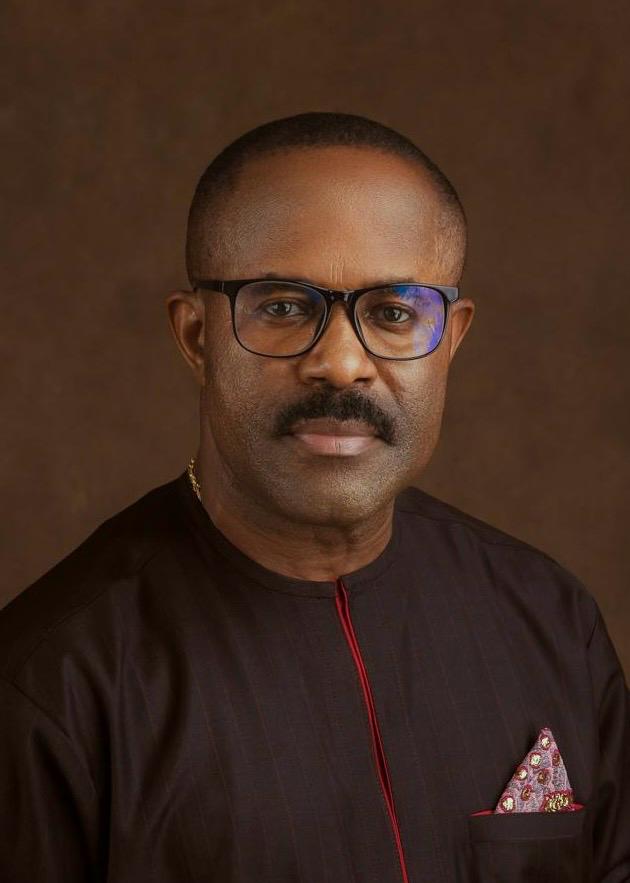
Professor Magnus Kpakol provides overall strategic leadership for this initiative. Drawing on decades of experience in economic policy, poverty eradication, and global partnerships, he ensures coherence between European/North America–based diaspora mobilization and Africa-based program implementation.
Economic Center will coordinate activities across the United States, Canada, Europe and Africa, working with diaspora organizations, financial institutions, policymakers, and development partners to scale impact.
The program is built on a simple but powerful principle: financial literacy is the foundation of wealth creation, but lasting prosperity requires turning knowledge into productive assets. Access to bank accounts, loans, or investment products alone does not …
guarantee financial security. People must understand how to manage income, budget, save, control debt, assess investment risks, avoid financial fraud, and make informed decisions that support long-term family economic goals.
Through continuing financial education, peer accountability, and voluntary participation in investment groups, the program provides a practical pathway from financial knowledge to asset ownership, entrepreneurship, and intergenerational wealth creation. It forms an integral part of Economic Center’s Total Economic Development (TeD) Strategy, which recognizes human capital development, productivity, and financial capability as essential foundations for sustainable prosperity.
Every subscriber to the program is known as a Legacy Wealth Builder. Participants receive financial literacy training designed to strengthen their financial discipline, improve their savings habits, understand investment opportunities, and make more informed decisions about borrowing and wealth creation.
Following the training, interested participants may join Legacy Wealth Circles—Esusu-type voluntary groups that encourage collective discipline, peer learning, accountability, and progressive investment. Members may voluntarily contribute from as little as ₦500 per month towards investments in suitable capital-market products managed by appropriately registered and qualified asset managers, with an emphasis on Federal Government securities.
These circles provide a community-based structure for learning, saving, investing, household financial planning, and entrepreneurship. Participation is voluntary, and group support is intended to strengthen informed decision-making without replacing individual rights, professional financial advice, or the requirements of regulated financial institutions.
The program seeks to help households move beyond day-to-day financial survival towards sustainable asset formation. Its training covers budgeting, spending, saving, debt management, investment risks, compounding, fraud prevention, and the distinction between income, consumption, and wealth.
It also incorporates economic, social, and global literacy to help participants better understand productivity, responsible economic participation, and the wider opportunities available in an interconnected world.
Through structured learning and progressive investment, Legacy Wealth Builders can develop the habits and knowledge needed to convert small, regular contributions into financial assets over time. Subject to applicable laws, investment product rules, and lender approval, eligible accumulated investment interests may also support access to microfinance credit.
The ultimate objective is to build financially informed households that are better positioned to save consistently, invest prudently, develop enterprises, manage financial obligations, and create opportunities for future generations.
Microfinance banks and institutions are strategic partners in bringing financial literacy and asset-building opportunities to low-income households and underserved communities. Through collaboration with Economic Center, participating institutions can introduce their customers to the program, support enrollment, and connect financial education with appropriate savings, investment, and credit services.
The proposed annual subscription for the financial literacy training is ₦5,000 per participant, payable by the participant or a sponsor, while voluntary investment contributions may begin from ₦500 per month.
Participating microfinance banks maintain their customer relationships and deposit accounts, support appropriate payment and account arrangements, and help participants better understand formal financial services, savings discipline, and loan obligations. Investments are executed through appropriately registered capital-market operators and approved arrangements, with individual investment records and proceeds maintained transparently.
This collaboration offers microfinance institutions an opportunity to strengthen customer relationships, promote financial inclusion, and contribute to poverty reduction and community development through continuing financial education. Economic Center also seeks mutually beneficial institutional partnerships, with customer referral arrangements and other agreed terms established transparently.
The program recognizes the important role of Africans in the diaspora in supporting families through remittances for education, healthcare, housing, household needs, and enterprise development. It seeks to make these financial relationships more intentional, transparent, and supportive of long-term economic progress, while preserving each family’s freedom to determine its priorities.
Economic Center aims to bring diaspora participants together with regulated microfinance banks and other appropriate institutions to establish trusted channels for family support, savings, financial education, business development, and participation in the Legacy Wealth Program.
Under this collaborative model, diaspora partners can contribute financial resources, professional expertise, technology, market connections, and mentoring. Microfinance institutions provide local relationships, payment and savings services, credit assessment, and financial infrastructure. Economic Center coordinates the program, mobilizes partners and participants, develops partnership arrangements, and supports monitoring of outcomes.
Diaspora organizations, philanthropists, and Promise Keepers may also sponsor participants who might otherwise be unable to access financial literacy training. All remittance, investment, custody, and related financial activities are to be handled through appropriate channels, with transparent records, participant consent, and safeguards for personal and financial information.
The Legacy Wealth Program promotes responsible borrowing rather than unrestricted access to credit. A Legacy Wealth Builder may apply for a loan from a participating bank, but every application remains subject to the lender’s normal credit assessment, applicable regulations, and approval requirements.
A Legacy Wealth Circle may review and endorse a member’s request in accordance with its written constitution. Where members voluntarily agree to use eligible investment interests as collateral, the arrangement must be properly documented, individually authorized, and accepted by the lender and relevant investment parties.
The program emphasizes transparent disclosure of fees, risks, and repayment obligations before any borrowing takes place. Circle rules may defer additional group-supported borrowing until an outstanding loan is repaid, but should not prevent members from accessing unrelated lawful credit.
These governance principles are intended to protect participants, preserve individual rights, promote accountability, and ensure that financial assets are used prudently in support of sustainable wealth creation.
Local governments are important partners in expanding the reach of the Legacy Wealth Financial Literacy Program. They can sponsor training subscriptions for eligible staff and residents according to their budgets and delivery capacity, prioritizing low-income households, women, young people, and underserved communities.
By integrating financial literacy with local enterprise development, employment, and community initiatives, local governments can help residents build stronger financial capabilities and pursue more sustainable livelihoods.
Economic Center invites local governments and participating institutions to collaborate in participant enrollment, training delivery, coordination, monitoring, and evaluation. Sponsorship arrangements, attendance, and participation outcomes are to be documented to support accountability and demonstrate the value of public and institutional investment in financial education. Quantity discounts may be available for large participant groups under written agreements.
The program welcomes microfinance banks and institutions, local governments, universities, businesses, community organizations, philanthropists, diaspora groups, and other development-minded leaders to become Champions and Promise Keepers by sponsoring training, mobilizing participants, sharing expertise, and supporting financial inclusion.
Implementation will involve partner agreements, curriculum and delivery arrangements, facilitator preparation, participant enrollment, the formation of Legacy Wealth Circles with written rules, and connections to approved investment opportunities. Progress will be assessed through measures such as enrollment, training completion, financial knowledge gains, savings activity, investment participation, participant retention, and loan repayment where applicable, with appropriate privacy safeguards.
The vision is to build financially informed and economically productive households and communities across Nigeria and Africa—people who can make sound financial decisions, accumulate assets progressively, develop enterprises, and create lasting opportunities for their families and future generations.
The Legacy Wealth Financial Literacy Program invites individuals and institutions to work together to transform financial knowledge into asset ownership and make lasting prosperity a practical pathway for more households. Together, we can fight generational poverty and build a stronger economic future for Nigeria and Africa.
We’ve built three distinct gateways — one for every kind of dreamer and doer. Whether you’re walking alone, leading a company, or shaping history, there’s a route designed just for you. Tap into the power of the capital market, unlock sustainable growth, and rewrite your story.
From Scarcity to Sustainable Wealth
Individuals or groups who seek poverty solutions in the capital market by contributing and investing funds, build generational wealth collectively, and benefit from training and financial inclusion.
Legacy Wealth Program pools these individuals who signs up for Economic Center’s generational wealth training and connects them to the capital market for mutual fund investments that yield capital gains.
Join us today by signing up for our training and generational wealth program as a participant.
Microfinance Banks can use the Legacy Wealth Financial Literacy Training program as a primary Corporate Social Responsibility activity.
Participating Microfinance banks and Institutions introduce their customers to the Legacy Wealth Financial Literacy Program and investment, requiring them to participate in an annual subscription of only Five Thousand Naira (N5,000).
With our training, even poor and low-income people can better strengthen savings habits, maintain active accounts, understand loan obligations, engage more confidently with formal financial services and stay up to date with global financial and market trends.
Participating Microfinance Banks develop deeper customer relationships and a credible community development proposition as they help drive the generational poverty eradication activities of the program.
Promise Keepers
Join the Legacy Wealth Creation program and help fight poverty by creating generational wealth in your community. The Legacy Wealth Creation program is looking for you to be a Champion — a Promise Keeper who is ready to raise the level in a more structured program. Continue to keep your solemn and personal promise to help someone.
Your contributions will save lives today, tomorrow and beyond. It will help end generational poverty and build lasting wealth for families and generations unborn.
READ MORE: https://tinyurl.com/27jv2784